

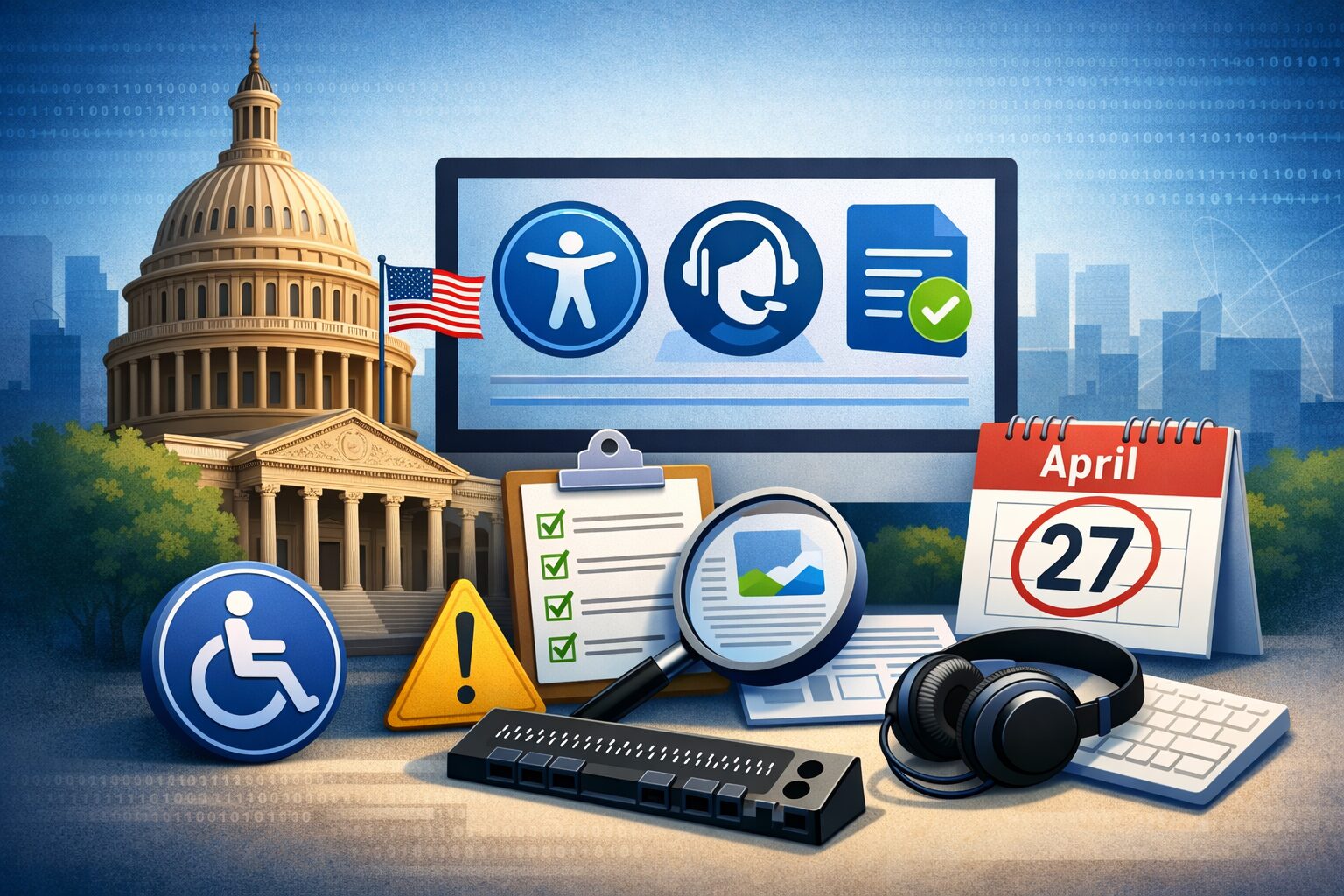
New ADA Accessibility Deadlines for the Public Sector
Government entities are facing a significant shift in digital accessibility expectations. A new rule requires state and local governments to ensure their websites and digital content meet ADA accessibility standards, with compliance deadlines tied to population size. For many, the first key date is April 27. While the timeline may vary, the expectation is clear. Public-facing digital content must be accessible to all users, including those using assistive technologies.
What the Rule Means in Practice
At its core, this requirement aligns with WCAG 2.1 Level AA standards, which focus on making web content perceivable, operable, understandable, and robust. Governments will need to evaluate not just their websites, but also documents such as PDFs, Word files, and online forms.
Accessibility goes beyond appearance. It includes how content is structured and whether it can be navigated using a keyboard or screen reader. For example, documents must have a defined reading order, proper tagging, and descriptive alternative text for images. These elements ensure that users relying on assistive tools can access the same information as any other visitor.
Common Gaps to Address
Many organizations already have accessibility efforts in place, but gaps often remain in everyday document creation and website updates. A practical starting point is reviewing commonly used files against established accessibility checklists.
For instance, accessible documents should include descriptive file names, proper heading structures, and meaningful hyperlink text. Images and charts must include alternative text, and color contrast should meet minimum standards to ensure readability. Tables also require careful formatting, including defined headers and logical reading order, to avoid confusion for assistive technologies.
Even small issues, such as using color alone to convey meaning or failing to structure headings correctly, can create barriers for users. These details often become widespread when templates or legacy documents are reused without review.
Taking a Proactive Approach
With deadlines approaching, many government entities are evaluating their current state of compliance and identifying where updates are needed. This often includes website audits, document remediation efforts, and implementing accessibility checks into ongoing processes.
Automated tools can help identify issues quickly, but manual review remains important for context and usability. Establishing internal standards and training staff who regularly publish content can also reduce risk over time.
The upcoming deadlines are more than a compliance exercise. They reflect a broader expectation that public services are accessible to all constituents. Taking steps now can help organizations meet requirements while improving the overall user experience.
Government entities that begin early and take a structured approach will be better positioned to meet their deadlines and maintain compliance moving forward.
Accessibility Resources:
WCAG (Web Content Accessibility Initiative) 2.1
- Quick Reference Sheet – https://www.w3.org/WAI/WCAG22/quickref/?currentsidebar=%23col_customize&versions=2.1&levels=aaa&techniques=advisory#text-alternatives
- This link will filter for only Level AA (Level AAA is not required) and for Sufficient Techniques (not “Advisory”) so it should filter out the “recommended but not required” bullets
- WCAG 2 Overview – https://www.w3.org/WAI/standards-guidelines/wcag/
- Overview of the DOJ’s final rule – https://www.ada.gov/resources/2024-03-08-web-rule/
Accessibility Checkers for the Web
These are some that we’ve found useful, most of them have options to check for different levels of WCAG so specify that you are using 2.1
Related Posts

Improving Public Services with Technology: The Role of E-Government in 2025
In today’s digital-first world, citizens expect the same level of speed, convenience, and transparency from their government as they do from businesses and other services. This is driving a continued transformation in how governments deliver services, with e-government playing a central role. By embracing technology, public agencies can increase efficiency, e
Preparing Early for GASB 105: Subsequent Events and Year-End Disclosure Discipline
GASB Statement No. 105, Subsequent Events, is effective for fiscal years beginning after June 15, 2026, and all reporting periods thereafter. While that date may feel distant, the practical work of preparing begins much earlier. The standard defines subsequent events as transactions or other events that occur after the date of the financial statements but [&hel

Strengthening Community Confidence Through Clear and Reliable Reporting
Government leaders know that trust is essential to effective governance. Communities rely on public agencies to manage resources responsibly, communicate openly, and demonstrate clear results. In an environment where budget pressures, compliance requirements, and community expectations continue to rise, accountability and transparency are no longer optional. Th
Internal Controls in the Public Sector: A Practical Approach to Risk Reduction
Government agencies operate under constant scrutiny, with expectations for transparency, accountability, and responsible stewardship of public resources. As regulatory requirements evolve and operational complexity increases, internal controls play a critical role in maintaining trust and reducing risk. Strengthening these controls is not simply a complian