
Making Sense of Audit, Review, and AUP Engagements
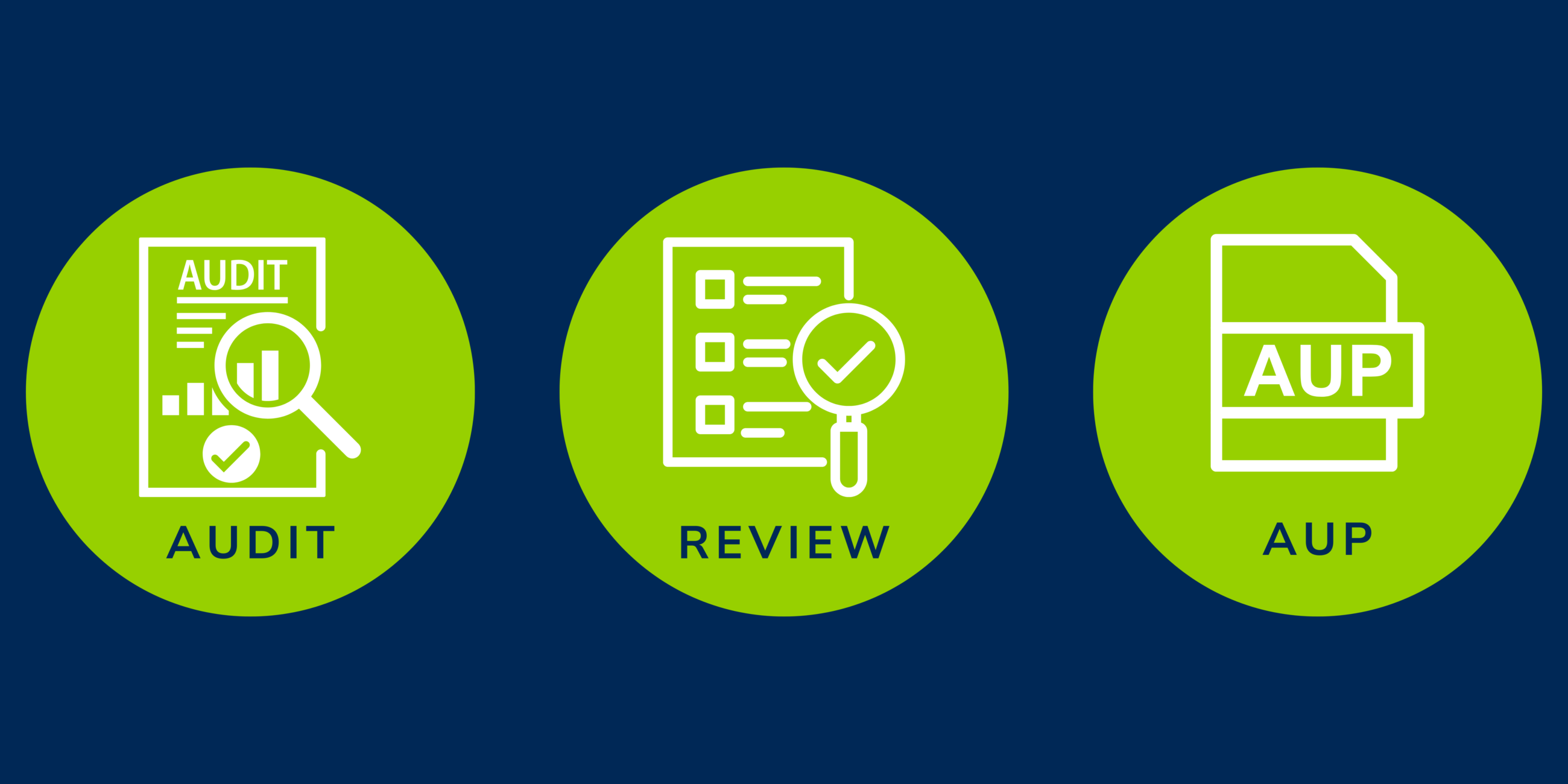
Selecting the right level of financial statement service is an important decision for any organization. Whether driven by lender requirements, grant compliance, or internal governance priorities, understanding the differences between an audit, review, and agreed-upon procedures (AUP) engagement can help leadership teams align their reporting approach with their needs.
Each option serves a distinct purpose, offering varying levels of assurance, scope, and flexibility. The key is knowing what stakeholders expect and how much insight or validation is required.
Audit: Comprehensive Oversight and Assurance
An audit provides the highest level of assurance available. It is designed to give stakeholders confidence that financial statements are free from material misstatement. This level of service involves a detailed examination of financial records, testing of transactions, and an evaluation of internal controls.
Audits are often required for organizations with external funding, lender covenants, or regulatory thresholds. They also appeal to boards seeking a deeper level of oversight and transparency. While an audit requires more preparation and investment, it delivers a thorough and independent perspective on financial reporting.
Review: A Practical Middle Ground
A review offers limited assurance and is typically a step down in scope from an audit. Rather than extensive testing, a review focuses on inquiries and analytical procedures to determine whether financial statements appear reasonable.
For organizations that do not require a full audit but still want to enhance credibility with stakeholders, a review can strike the right balance. It provides an added layer of confidence without the time and cost associated with an audit. However, it does not include an evaluation of internal controls, which may be a consideration depending on organizational risk factors.
Agreed-Upon Procedures (AUP): Targeted Insight
An AUP engagement is fundamentally different from both an audit and a review. Instead of providing an overall opinion or assurance conclusion, it focuses on specific areas identified by the organization and its stakeholders.
This approach is highly flexible and can be tailored to address targeted concerns such as compliance requirements, transaction testing, or internal control reviews. The result is a report of findings based on the agreed procedures, allowing stakeholders to draw their own conclusions.
AUP engagements are particularly useful when a full audit is not necessary, but specific risks or questions need to be addressed with precision.
Aligning the Right Service with Your Needs
There is no one-size-fits-all answer when it comes to assurance services. The right choice depends on external requirements, governance expectations, and the level of insight your organization is seeking.
Understanding these distinctions allows leadership teams to make informed decisions that balance transparency, compliance, and efficiency. If your organization is evaluating its options or experiencing changes in funding or oversight expectations, a conversation with your Brady Martz advisor can help clarify the best path forward.
Related Posts

Non-Profit Partnerships: Building Collaborations for Greater Impact
In the nonprofit sector, collaboration is key to achieving meaningful and sustainable change. As organizations work toward fulfilling their missions, forming strategic partnerships can amplify their impact, extend their reach, and leverage resources more efficiently. By coming together with like-minded partners, nonprofits can achieve goals that might be diffic

Single Audit Requirements for Nonprofits: What You Need to Know
For many nonprofit organizations, federal funding plays a vital role in supporting programs and expanding impact. Along with that funding comes added responsibility, including audit requirements under Uniform Guidance. Understanding when these requirements apply and what options may be available can help nonprofit leaders stay informed and prepared as their org

Navigating Government Grants: Strategies for Non-Profits to Secure Public Funding
Securing government grants is a powerful way for nonprofit organizations to fund programs and expand their impact. However, navigating the complex landscape of public funding can be daunting. With thousands of grant opportunities available at the federal, state, and local levels, understanding the application process and crafting a compelling proposal can make

From Donors to Champions: Building Deeper Relationships Through Storytelling
In the nonprofit world, relationships are everything. Donors aren’t just sources of funding—they’re partners in impact. The difference between a one-time donor and a lifelong advocate often comes down to one simple factor: connection. And one of the most powerful ways to build that connection is through storytelling. When d