


Transaction Readiness: What Business Owners Should Clean Up Before Going to Market
Bringing a business to market is a major step, and preparation can have a meaningful impact on how smoothly the process moves. Buyers want confidence in the numbers, clarity around operations, and documentation that supports the story being presented. When those items are not ready, due diligence can slow down, create uncertainty, or lead to […]

What Contractors Should Know About Bonus Depreciation and Long-Term Contract Rules
Bonus Depreciation for Contractors in 2026 Construction businesses enter 2026 with a lot to manage. Bonus depreciation for contractors adds another planning layer, especially for businesses making equipment purchases or managing long-term contracts while also watching labor availability, material costs, project timelines, and margin pressure. Bonus Depreciation

Is 2026 the Right Time to Revisit Your Business Valuation?
For many business owners, valuation becomes a priority only when a sale, succession plan, buyout, or financing need is already in motion. However, a business valuation can be just as valuable before a major event occurs. As 2026 brings continued shifts in interest rates, buyer expectations, earnings trends, and market confidence, now may be a goo

The June 30, 2026 Tax Incentive Deadline: What Builders and Developers Need to Know
What the 2026 Tax Incentive Deadline Means Builders and developers are already managing a busy mix of project timelines, cost pressures, labor needs, financing questions, and changing federal policy. Recent construction industry insight also points to continued activity in areas such as infrastructure, power, water, data centers, and semiconductor projects, whi

Freebies and Giveaways: How States Tax Promotional Items in 2025
Businesses hand out free items for all kinds of reasons, and summer often brings more opportunities to do so. Company shirts for employees volunteering at a community event. Branded water bottles or tote bags at a local fair, golf outing, parade, or customer appreciation event. Small gifts for employees during summer celebrations. Donations to nonprofits, [&hel

Preparing for 2026 Form 1099 Filing Changes
The 2026 tax year will bring several meaningful changes to Form 1099 reporting. For many businesses, these updates may affect vendor tracking, payroll-related reporting, filing workflows, and year-end processes. While the filing season for 2026 returns will not arrive until early 2027, waiting until year-end to prepare could create unnecessary pressure. T

Qualified Production Property: A 2026 Planning Opportunity for Contractors and Facility Owners
Recent IRS guidance has brought new attention to Qualified Production Property, or QPP, and its role in facility planning for businesses involved in manufacturing, production, refining, and certain agricultural production activities. For owners considering new facilities, expansions, or major improvements, the QPP rules may create a meaningful timing and cash-f
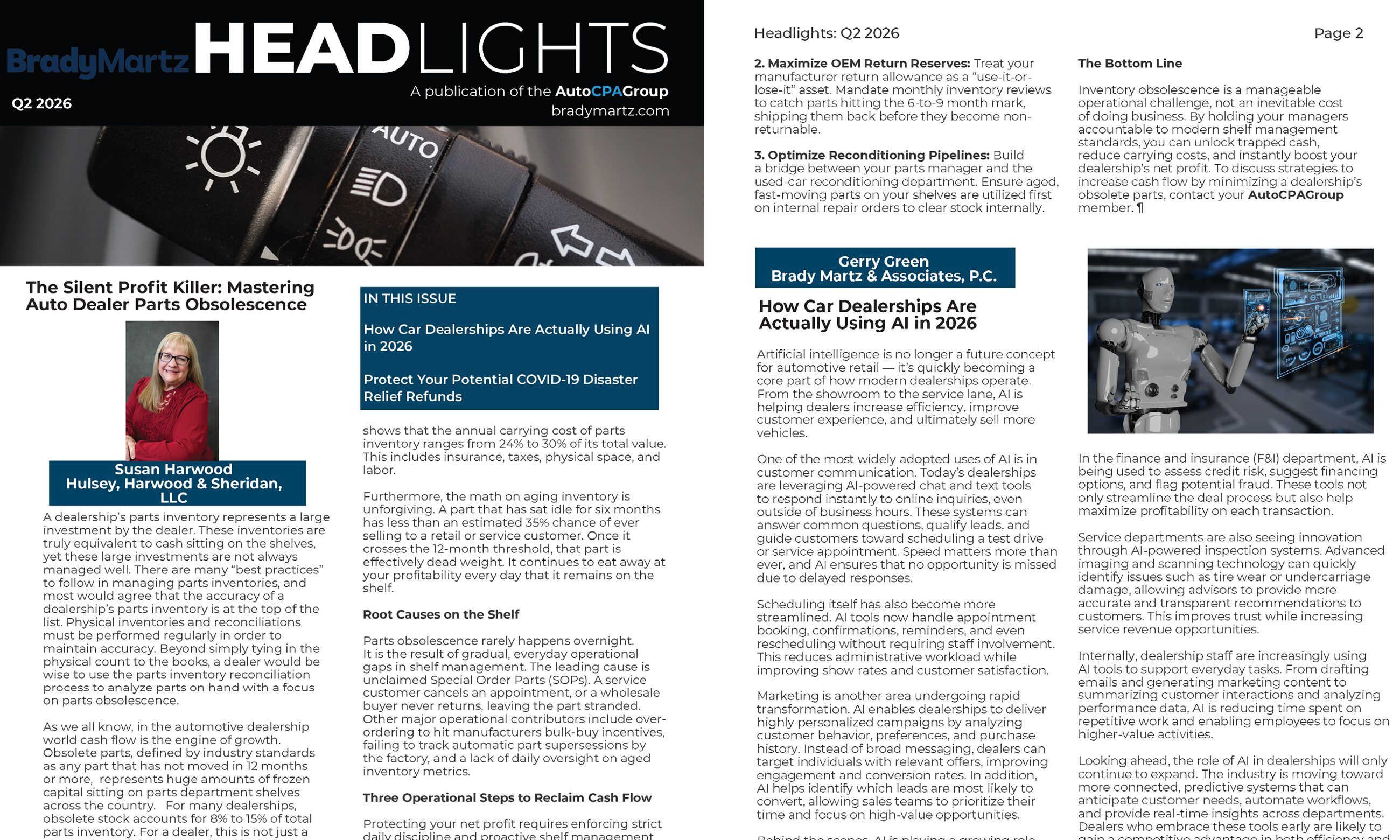
Headlights Newsletter – Q2 2026
The latest issue of Headlights, a publication of the AutoCPA Group, is now available. Click here to access the newsletter.

Building Trust Through Structure: Key Internal Controls for Nonprofit Organizations
Nonprofit organizations operate in an environment where trust is essential. Donors, grantors, and stakeholders expect transparency and accountability in how funds are managed. Internal controls play a central role in meeting those expectations. While often associated with larger organizations, strong internal controls are just as important for smaller nonpr

Loan Portfolio Reviews: Strengthening Insight into Credit Risk and Performance
Loan portfolio reviews have long been a foundational practice for financial institutions, but their importance is growing in today’s environment. As economic conditions shift and borrower performance becomes less predictable, institutions are placing greater emphasis on understanding what is happening beneath the surface of their portfolios. A well-exec