

Everyday Cleaning Services May Be Taxable. Here’s How States Handle It.
Cleaning and janitorial services feel like routine operating expenses, but in several states, the tax rules tied to this work are more complicated than many businesses expect. Light office cleaning, dusting, window washing, or disinfecting services can trigger sales tax obligations depending on where the service is performed. For multi-location businesses or co
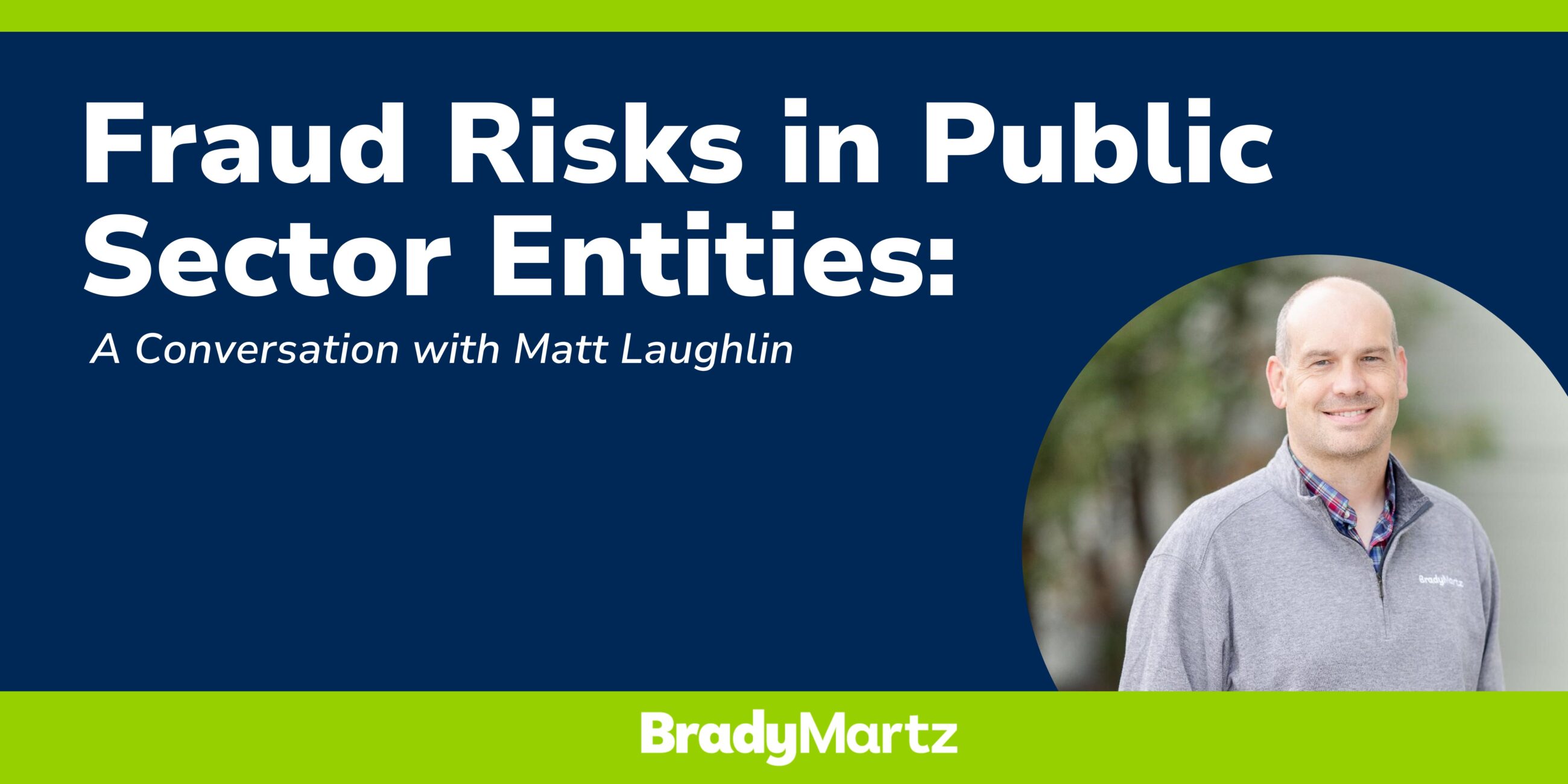
Fraud Risks in Public Sector Entities: A Conversation with Matt Laughlin
Public sector organizations are responsible for serving their communities while protecting the resources entrusted to them. With complex funding sources, decentralized operations, and evolving compliance requirements, fraud risk can arise in ways that are not always easy to spot. To better understand where risks commonly appear and how organizations can respo

Fundraising Events: Still a Strategic Tool or Losing Momentum?
Fundraising events have long been a cornerstone for nonprofit organizations and community initiatives. From gala dinners to golf tournaments, these gatherings have traditionally served a dual purpose. They generate financial support while strengthening relationships with donors. In recent years, however, many organizations are questioning whether these events s

Bank Secrecy Act Updates: What Financial Institutions Should Be Watching
The Bank Secrecy Act (BSA) remains a critical component of the regulatory framework for financial institutions. As financial crime risks evolve and regulatory expectations continue to shift, institutions are placing increased attention on how their BSA programs are structured, monitored, and maintained. Recent developments ar
Internal Controls in the Public Sector: A Practical Approach to Risk Reduction
Government agencies operate under constant scrutiny, with expectations for transparency, accountability, and responsible stewardship of public resources. As regulatory requirements evolve and operational complexity increases, internal controls play a critical role in maintaining trust and reducing risk. Strengthening these controls is not simply a complian
Using Form 990 to Tell Your Organization’s Story
For many nonprofit organizations, Form 990 is viewed primarily as a compliance requirement. It is filed annually, reviewed for accuracy, and submitted to satisfy IRS obligations. Yet, this document serves a much broader purpose. It is one of the most visible and widely accessed representations of your organization’s mission, operations, and impact.&
Compliance Management Systems: Building a Stronger Foundation for Risk and Regulation
Compliance management systems (CMS) are a cornerstone of effective risk management for financial institutions. As regulatory expectations continue to evolve, institutions are placing greater emphasis on building structured, well-documented systems that support consistent compliance across the organization. A strong CMS does more than help meet regulatory

Leveraging Technology for Real-Time Public Financial Reporting
Public sector organizations are under increasing pressure to deliver timely, transparent financial information. Stakeholders expect more than periodic reports. They want clear, up-to-date insight into how funds are being managed and allocated. Advances in technology are making this shift not only possible, but practical. Moving Beyond Period-End Reporting
Where Fraud Hides in NFPs and Why It Often Goes Unnoticed
Not-for-profit organizations operate with a strong sense of mission and trust. That same environment, while essential to fulfilling their purpose, can unintentionally create conditions where fraud risks go unnoticed. Limited resources, lean teams, and high reliance on trust often mean certain vulnerabilities are not immediately vis