

Form 8300 Cash Reporting: A Year-End Deal Jacket Self-Audit
Large cash transactions are not unusual in the dealership environment. Customers may use currency, cashier’s checks, money orders, bank drafts, or other payment methods as part of a vehicle purchase, down payment, lease transaction, or related add-on. When those payments cross certain thresholds, Form 8300 reporting requirements can become part of the compliance picture.
For dealer principals, controllers, and office managers, year-end is a useful time to review whether deal jackets support the dealership’s cash reporting process. This review should not replace timely filing. Instead, it can help confirm that large cash transactions were identified, documented, reported, and followed through appropriately.
Start With the Deal Jacket
Form 8300 generally applies when a business receives more than $10,000 in cash in one transaction or in related transactions. For dealerships, the key is making sure the deal jacket tells a complete story.
A self-audit may include reviewing payment receipts, buyer information, copies of checks or money orders, finance documents, deposit records, and notes regarding who provided the funds. If a filing was required, the deal jacket should make it clear when the cash was received, when Form 8300 was filed, and how the dealership supported the information reported.
Incomplete documentation can create confusion later, especially if the transaction involved multiple payments, multiple buyers, a trade, or funds provided by someone other than the customer listed on the purchase documents.
Related Transactions Need Attention
One of the most common areas of risk is related transactions. A single payment under the reporting threshold may not end the analysis if other cash payments are connected to the same customer, vehicle, or transaction.
For example, a customer may make a cash down payment, then return later to pay for accessories, service work, protection products, or other items tied to the original vehicle purchase. Separate payments may still need to be reviewed together.
This is where internal communication matters. Sales, F&I, accounting, and service may each see part of the customer relationship. If those teams are not aligned, related cash payments can be missed.
Do Not Forget Customer Notices
Filing Form 8300 is only part of the process. Dealerships may also need to provide written notice to each person named on a required Form 8300 by January 31 of the following year.
A year-end review should confirm that notices are tracked, prepared, and retained with supporting records. It is also a good time to verify that the dealership’s process clearly assigns responsibility for sending notices and maintaining copies.
Make the Review Part of Your Control Routine
A practical Form 8300 self-audit does not need to be complicated. Select deal jackets with larger cash receipts, compare them to accounting records, review related payments, confirm filing support, and check customer notice tracking. The goal is to identify gaps before they become harder to resolve.
Brady Martz works with dealerships to review accounting processes, internal controls, and compliance-related business risks. If your dealership handles large cash transactions, a year-end deal jacket self-audit can help strengthen documentation and support a more consistent reporting process.
Related Posts
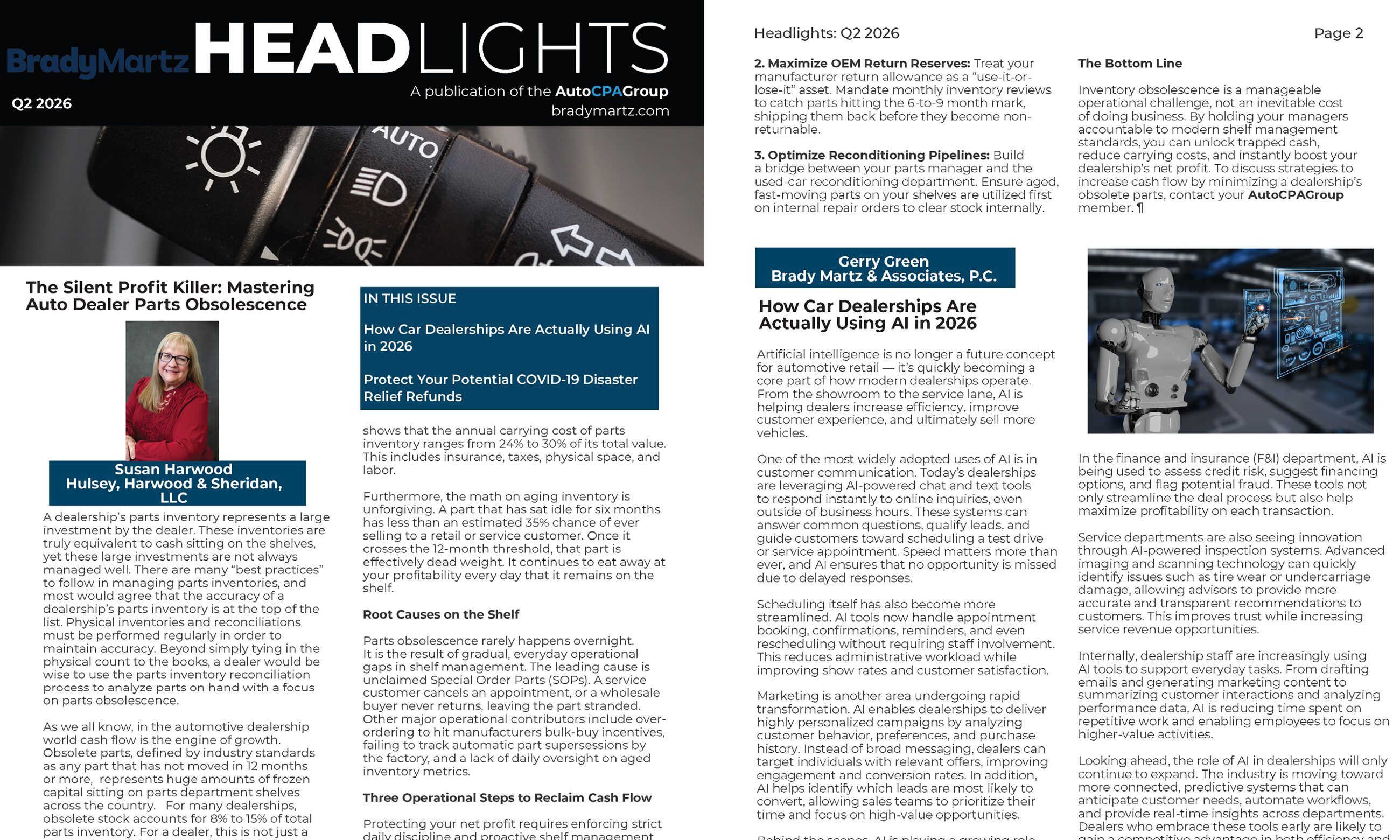
Headlights Newsletter – Q2 2026
The latest issue of Headlights, a publication of the AutoCPA Group, is now available. Click here to access the newsletter.

The Future of Dealership Marketing: Digital Strategies to Drive Sales
In 2025, marketing for auto dealerships is evolving at a rapid pace. With the increasing reliance on digital platforms and the ever-changing consumer behavior, dealerships must adapt their marketing strategies to stay competitive and drive sales. Traditional methods alone no longer suffice, and digital marketing is taking center stage in dealership success. In

Preparing for Q4: Year-End Auto Dealership Sales Strategies for 2025
Every dealership leader knows the last quarter of the year is crunch time. The phones are busier, the showroom is more active, and the pressure to meet year-end goals is real. Manufacturers push hard to hit their targets, customers are motivated by end-of-year deals, and tax planning drives many businesses to make big purchases before […]
How Often Should Dealers Really Review Their Financial Statements?
For many dealerships, financial statements are reviewed once a month, often after the accounting close. That monthly review is important, but it should not be the only time leadership looks at performance. In a dealership environment where inventory, floor-plan interest, incentives, gross profit, and cash flow can shift quickly, waiting until month-end may