

How Often Should Dealers Really Review Their Financial Statements?
For many dealerships, financial statements are reviewed once a month, often after the accounting close. That monthly review is important, but it should not be the only time leadership looks at performance. In a dealership environment where inventory, floor-plan interest, incentives, gross profit, and cash flow can shift quickly, waiting until month-end may leave leaders reacting later than they would like.
Recent dealer market data has pointed to softer new-vehicle sales, rising inventory levels, and changing product mix, all of which can affect working capital and per-unit profitability. A stronger reporting rhythm helps dealers see those changes sooner and respond with better information.
Monthly Statements Tell the Bigger Story
Monthly financial statements remain essential. They provide a complete picture of dealership performance, including profitability, expense trends, balance sheet strength, debt levels, and department results. Owners and executive leaders can use monthly statements to evaluate whether the dealership is moving in the right direction and whether results align with broader goals.
However, monthly statements are often retrospective. By the time they are finalized, some decisions have already been made. That is why high-performing dealers often pair monthly financials with more frequent key performance indicators.
Weekly KPIs Help Leaders Act Sooner
Weekly KPIs do not need to replace monthly statements. They should support them. Metrics such as cash position, new and used inventory aging, gross profit per unit, floor-plan expense, receivables, service efficiency, and expense pacing can give leadership a more current view of the business.
A weekly cadence helps managers spot pressure points before they become larger issues. For example, rising inventory age may signal future margin compression. A shift in gross profit per unit may raise questions about pricing, incentives, or sales mix. Expense increases may be easier to address when they are identified early.
Different Leaders Need Different Views
Owners, general managers, and controllers may all review the same financial information, but they often need different levels of detail.
Owners typically need a higher-level view of profitability, cash flow, debt, return on investment, and long-term financial health. General managers may focus more closely on department performance, sales pace, inventory, staffing, and controllable expenses. Controllers need the detail behind the numbers, including reconciliations, schedules, unusual entries, and timing differences.
When each leader has the right view, financial reporting becomes more useful and less overwhelming.
What CPAs Often Notice
CPAs may notice items that dealership teams overlook during routine reviews. These can include balance sheet accounts that are not clearing timely, unusual expense trends, aging receivables, weak documentation, inventory valuation issues, or changes in margins that deserve more discussion.
The goal is not to create more reports for the sake of reporting. The goal is to build a review process that helps leaders ask better questions. Dealerships that combine monthly financial statements with weekly KPIs are often better positioned to manage cash, control expenses, and make decisions with confidence.
Brady Martz works with dealership clients to review financial reporting practices, identify key metrics, and help leadership teams use financial information as a practical management tool.
Related Posts

Using Data Analytics to Improve Sales Forecasting and Inventory Management
Dealerships operate in a fast-paced and constantly shifting market. From manufacturer incentives and seasonal demand changes to fluctuating interest rates and supply chain challenges, staying ahead requires more than instinct — it requires insight. One of the most valuable tools available to dealerships today is data analytics, which can significantly improve
Headlights Newsletter – Q3 2026
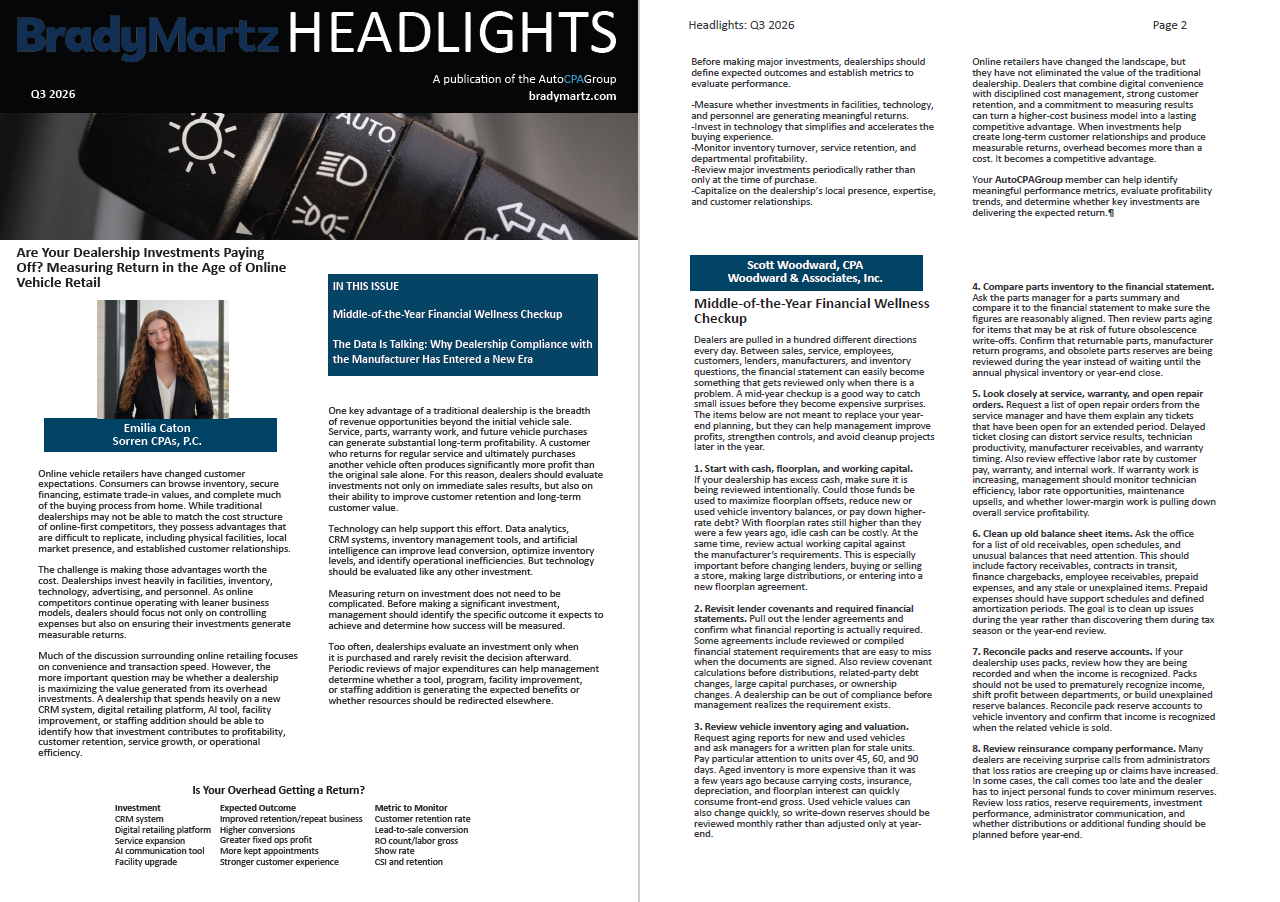
The latest issue of Headlights, a publication of the AutoCPA, is now available. Click here to access the newsletter.

Are Credit Card Processing Fees Taxable?
More businesses are adding credit card surcharges, convenience fees, swipe fees, or similar charges to offset processing costs. While these charges may feel separate from the product or service being sold, many states view them as part of the taxable sales price. That can lead to confusion for businesses that treat the surcharge as a […]

Year-End Tax Considerations for Dealerships: What to Review Before Closing Out 2025
As dealerships prepare to close their books for 2025, tax strategy becomes just as important as sales performance. The final weeks of the year bring opportunities to reduce tax liability, strengthen financial positions, and enter 2026 with clearer visibility and fewer surprises. But dealership tax planning is complex, with inventory rules, floorplan interest co