


LIFO Inventory Planning in a More Volatile Vehicle Market
Vehicle inventory has become harder to predict. Dealers are managing changing supply levels, elevated vehicle costs, shifting incentives, tariff-related pricing pressure, and the normal challenges that come with model-year transitions. For dealerships using the LIFO inventory method, these factors can have a meaningful impact on year-end tax planning.
LIFO is often viewed as a year-end calculation, but the inputs that shape it develop throughout the year. Inventory levels, cost changes, vehicle mix, and timing all matter. In a more uneven market, waiting until the final weeks of the year can leave less room to understand what the numbers may mean.
Inventory Levels Can Drive LIFO Results
Dealerships using LIFO generally benefit when inventory costs rise and year-end inventory levels are maintained or increased. However, if inventory drops significantly before year-end, the dealership may experience a LIFO layer reduction. That can reduce or reverse some of the tax deferral created in prior years.
This makes year-end inventory management especially important. A strong sales month, delayed allocations, limited model availability, or decisions to clear aged units can all influence the final inventory count. Even when those moves make business sense, they may also affect the LIFO calculation.
Higher Costs and Tariffs Add Complexity
Vehicle costs remain elevated, and tariff-related costs can add another layer of uncertainty. Depending on how manufacturers adjust pricing, incentives, destination charges, or allocations, dealers may see different effects across brands and vehicle classes.
For LIFO purposes, cost movement is not only about whether prices are higher overall. The timing of those increases, the mix of vehicles on the lot, and the relationship between new and prior inventory layers can all matter. Dealers should understand how cost changes are flowing through their inventory records before year-end planning is finalized.
Model-Year Timing Still Matters
Model-year changeovers can create additional planning challenges. Dealers may be balancing outgoing model-year vehicles, incoming units, incentive programs, customer demand, and floor-plan costs at the same time. A year-end lot that looks healthy from an operations standpoint may still produce a different LIFO result than expected if the inventory mix has shifted.
This is why coordination between dealership leadership, the accounting team, and tax advisors is so important. Sales strategy, purchasing decisions, and inventory timing can each affect the year-end tax picture.
Start the Conversation Before Year-End
LIFO planning is not about letting tax drive every inventory decision. It is about understanding the tax impact of decisions the dealership is already making. In a volatile vehicle market, that understanding can help reduce surprises and support more informed year-end conversations.
Brady Martz works with dealerships to evaluate inventory trends, review year-end planning issues, and identify questions that should be addressed before the books close. If your dealership uses LIFO, now is a good time to revisit how current market conditions may affect your year-end calculation.
Related Posts

Hiring and Retaining Top Talent in the Auto Dealership Industry
In the fast-paced world of auto dealerships, your greatest competitive edge isn’t just the vehicles you sell — it’s the people behind the scenes. Finding and keeping skilled, motivated employees is more than a challenge; it’s a make-or-break factor for your dealership’s growth and long-term success. A strong team doesn’t just boost sales and servi

Succession Planning in Dealerships: Avoiding Family Feuds and Financial Pitfalls
Succession planning is one of the most important and most sensitive processes a dealership will ever navigate. For many owners, the dealership isn’t just a business; it’s a legacy built over decades, shaped by family involvement, and tied closely to personal identity. That’s exactly why transitions can become complicated, emotional, and at times, contenti
How Often Should Dealers Really Review Their Financial Statements?
For many dealerships, financial statements are reviewed once a month, often after the accounting close. That monthly review is important, but it should not be the only time leadership looks at performance. In a dealership environment where inventory, floor-plan interest, incentives, gross profit, and cash flow can shift quickly, waiting until month-end may
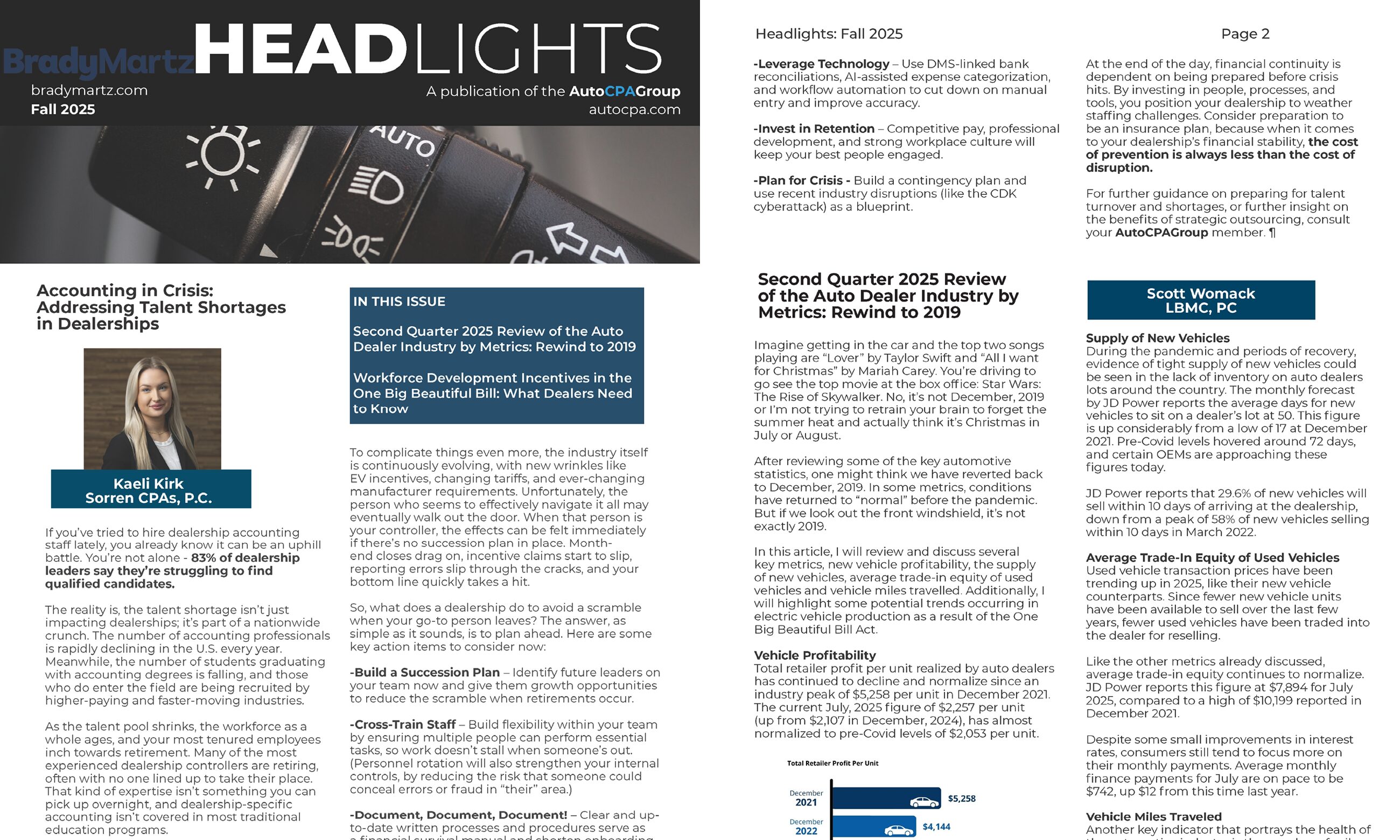
Headlights Newsletter – Fall 2025
The latest issue of Headlights, a publication of the AutoCPA Group, is now available. Please click here to access the newsletter.